
The Monroe County Most Wanted Program
Monroe County has no formal most-wanted roster, and its agencies publish nothing of the kind. The Monroe County Sheriff’s Warrant Division page sticks to the practical: a phone number, a fax number, an email address, and a description of the division’s work. There is no public name table, no photographs, and no online warrant-clearing form. That matters more than it might seem. Any third-party roster floating around online carries no Sheriff approval, so treat it as rumor until an official channel confirms it.
The official route is straightforward. MyCase can surface public court events tied to a case. The Clerk handles requests for eligible court records. The Warrant Division answers operational questions about how service works. If the Sheriff ever launches a formal list, rely only on the agency’s own current page and check its update date before acting on it.
Monroe County Publishes Contact, Not Rosters
The official Sheriff website and its Warrant Division materials lead to agency contacts rather than a countywide most-wanted display. That gap should not be filled by a commercial product, because a law-enforcement record, a court docket, and a chosen public notice are three different things. Monroe County simply publishes contact information, and the honest move is to use it: view the Monroe County Sheriff source for the agency’s own channels.
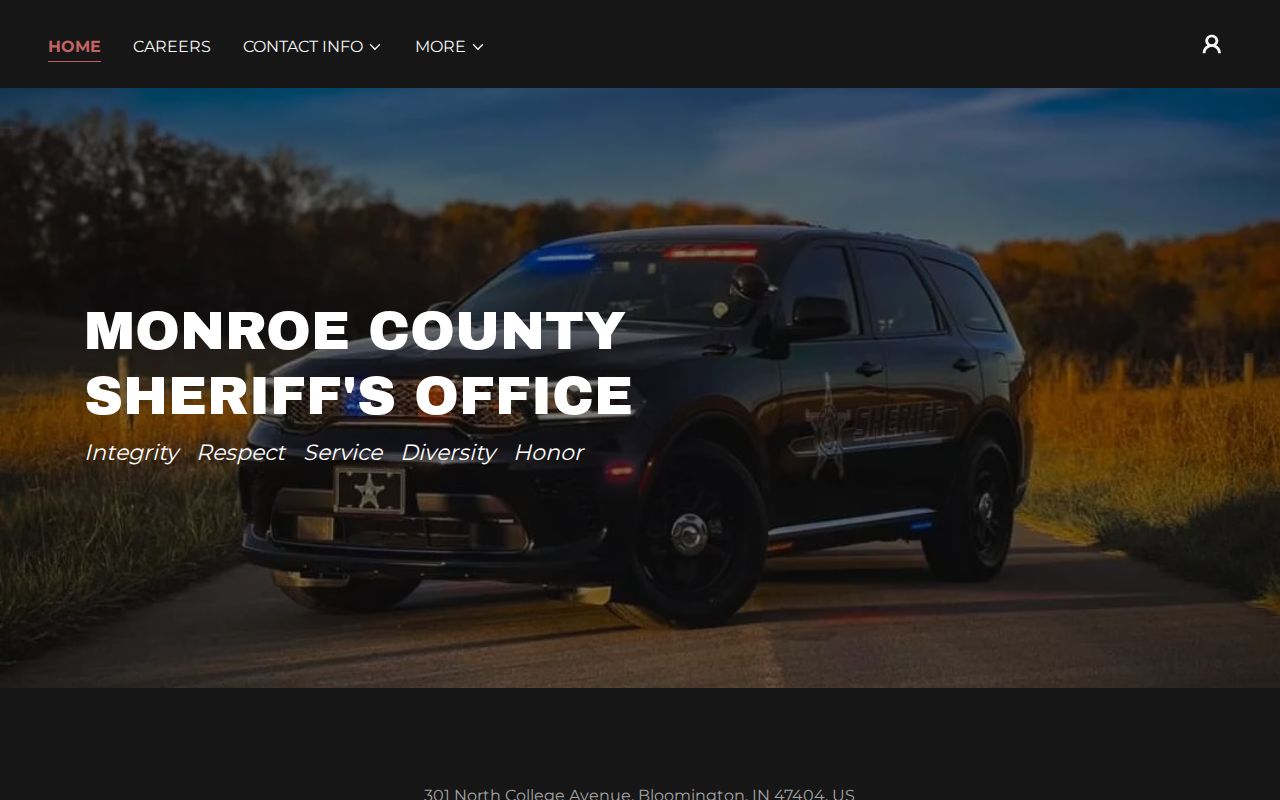
The official page shows the split plainly. Monroe County offers agency navigation and contact channels, but no verified general most-wanted table.
How the Lists Work
A most-wanted list, where one exists, is a selected public-safety notice rather than the full set of active warrants. An agency picks a handful of urgent cases for public attention while plenty of other court process stays off the page. Monroe County publishes no selection criteria, update cycle, or removal policy because no local list exists there.
Any future Monroe County roster should name its publisher, define “wanted,” show when information was checked, and explain how recalled or served process comes off the page. A person can be arrested, surrender, or obtain a recall between updates. Absence from a list never proves there is no warrant. Current status always rests with the issuing court and the Warrant Division.
Note: A public notice is a dated agency message, not a complete or permanent certificate of warrant status.
Verify Monroe County Warrant Status
Indiana’s MyCase portal is the online starting point for eligible Monroe Circuit Court cases. Search by case number, citation number, cross-reference, party, or attorney. Monroe Circuit Court divisions carry codes 53C01 through 53C09. Results are case information only, not a live police warrant certification, so confirm Monroe County warrant status through the court itself.
- Use MyCase to locate the relevant public case or citation.
- Read the event and court division without assuming a warrant is active.
- Call the Monroe County Clerk at 812-349-2614 for record routing.
- Call the Warrant Division at 812-349-2778 for operational confirmation.
- Contact counsel or the court before choosing a surrender or response step.
Restricted, sealed, expunged, juvenile, and mental-health matters may not appear. An empty search is not proof that no warrant exists in Monroe County.
How to Report a Tip Safely
Monroe County has no verified Crime Stoppers most-wanted program, so do not send details to a site claiming to offer an anonymous county reward. For an immediate threat, call emergency services. For non-emergency information tied to a warrant, start with the Sheriff’s official contact channels. The Warrant Division lists 812-349-2778 and investigations@co.monroe.in.us.
- Choose an official agency channel from its own domain.
- State the location and facts you personally observed.
- Do not follow, approach, detain, or confront anyone.
- Ask how to provide added material safely.
Key Point: No verified local reward program exists, so never assume a tip is anonymous or paid unless the agency itself says so.
Monroe County Public Record Requests
The Indiana Access to Public Records Act, Indiana Code 5-14-3, governs many agency requests, while court files are also controlled by the Indiana Rules on Access to Court Records. An APRA request works best when it names a public document, policy, date range, or anonymous aggregate. A blanket demand for every person with a warrant may seek a record that does not exist in that form, or material shielded by an investigatory exemption.
The Sheriff form says the agency may acknowledge receipt within seven days and then respond in a reasonable period, subject to exemptions, fees, and agency needs. The Clerk records page is the route for eligible case documents. Online data is not the official record, and the Clerk advises requesters not to pay until a fee is confirmed.
Most Wanted vs an Active Warrant
People mix these terms up, but they mean different things. A most-wanted notice is a list an agency chooses to publicize, while an active warrant is court process that has not been served, recalled, quashed, or otherwise ended. Monroe County publishes no verified complete roster for either one, so only official confirmation settles the question.
| Feature | Most Wanted Notice | Active Warrant |
|---|---|---|
| Scope | Selected agency notice | Individual court process |
| Monroe list | No stable roster located | No complete roster located |
| Public lead | Sheriff announcements | MyCase and Clerk |
| Confirmation | Publishing agency | Court or Warrant Division |
| End point | Agency removes notice | Service, recall, quash, or court action |
A docket entry and an executable warrant are not the same thing, and the Monroe County active-warrants reference explains why.
Monroe County Updates Need Context
Monroe County has no most-wanted roster today, so judge any list that appears later with care. Ask who published it. The Sheriff, a city police department, a prosecutor, or a federal office each run their own pages. A timestamp, a selection standard, and a named warrant type tell you how fresh a list is. So does the issuing court behind each entry. Some notices track probation, not an arrest warrant. Those labels are not interchangeable. Removal rules deserve equal attention, meaning whether an entry drops after arrest, surrender, service, recall, or court confirmation. Strong lists also warn readers never to confront anyone. If those points are missing, call the publishing agency; the Monroe County Clerk can check a docket for later court action, but a docket answer never replaces an operational answer from law enforcement.
Federal Wanted Notices Are Separate
A federal warrant touching Monroe County does not run through Monroe Circuit Court; federal matters belong to the Indianapolis Division of the U.S. District Court for the Southern District of Indiana. PACER provides federal docket access, and the U.S. Marshals Service handles federal fugitive work. Neither one is a Monroe County most-wanted list. The U.S. Marshals Southern District page gives the agency's own route. Expect possible PACER fees, and know that sealed documents stay sealed. A MyCase search cannot rule out a federal matter. Follow the federal publisher's current notice and instructions rather than any copied profile.
If You Believe You Are on a List
Skip third-party rosters when the question is your own name. Pull up your eligible case in MyCase, and note the case number and division. Then call counsel. The Monroe County Public Defender is reachable through the justice directory at 812-349-2590, though eligibility and representation must be confirmed directly. Next, contact the issuing court or Warrant Division. What follows may be a court date, a motion, a surrender arrangement, a bond direction, or judicial recall. Paying alone does not clear every warrant. No Clerk employee can promise a judge will recall one.
Act Carefully: Confirm status with counsel, the court, or Warrant Division before appearing, paying, or making a surrender plan.
Monroe County Program Boundaries
Monroe County keeps firm boundaries around what a warrant listing can be used for. Names, charges, and photos belong in the official notice and nowhere else, partly because a list goes stale once a warrant is served or recalled. Tax warrants are a different matter. The Sheriff’s tax page explains an Indiana Department of Revenue collection route, not an arrest list, and it warns against prepaid-card or wire-transfer threats. Bloomington, Ellettsville, and Stinesville post no separate public rosters either. Local police may act on valid process, but a Monroe County warrant check still runs through Monroe Circuit Court, the Clerk, MyCase, and the Warrant Division. Never approach a person based on a post, an old docket event, or a third-party list; give current facts to the proper agency.